6 min read
How to Secure Cloud-Native Infrastructure in the Energy Sector
Cloud-native adoption is accelerating across the energy sector, but security hasn’t kept pace. In 2024, the average cost of a data breach in energy...
Build intelligent, data-driven capabilities that turn raw information into insights, automation, and smarter decision-making across your organization.
Modernize, secure, and operationalize your cloud environment with solutions that strengthen resilience, reduce risk, and improve IT performance.
Deliver modern applications and connected IoT solutions that enhance operations, streamline workflows, and create seamless digital experiences.
High-impact IT project execution from planning to delivery, aligned with business goals and designed for predictable outcomes.
Structured change management and M&A support that helps teams adapt, reduce disruption, and successfully navigate complex transitions.
Cloud-first IT operations that streamline cost, strengthen security, and provide modern, scalable infrastructure for growing teams.
6 min read
Serverless Solutions Marketing Team : Updated on February 26, 2026
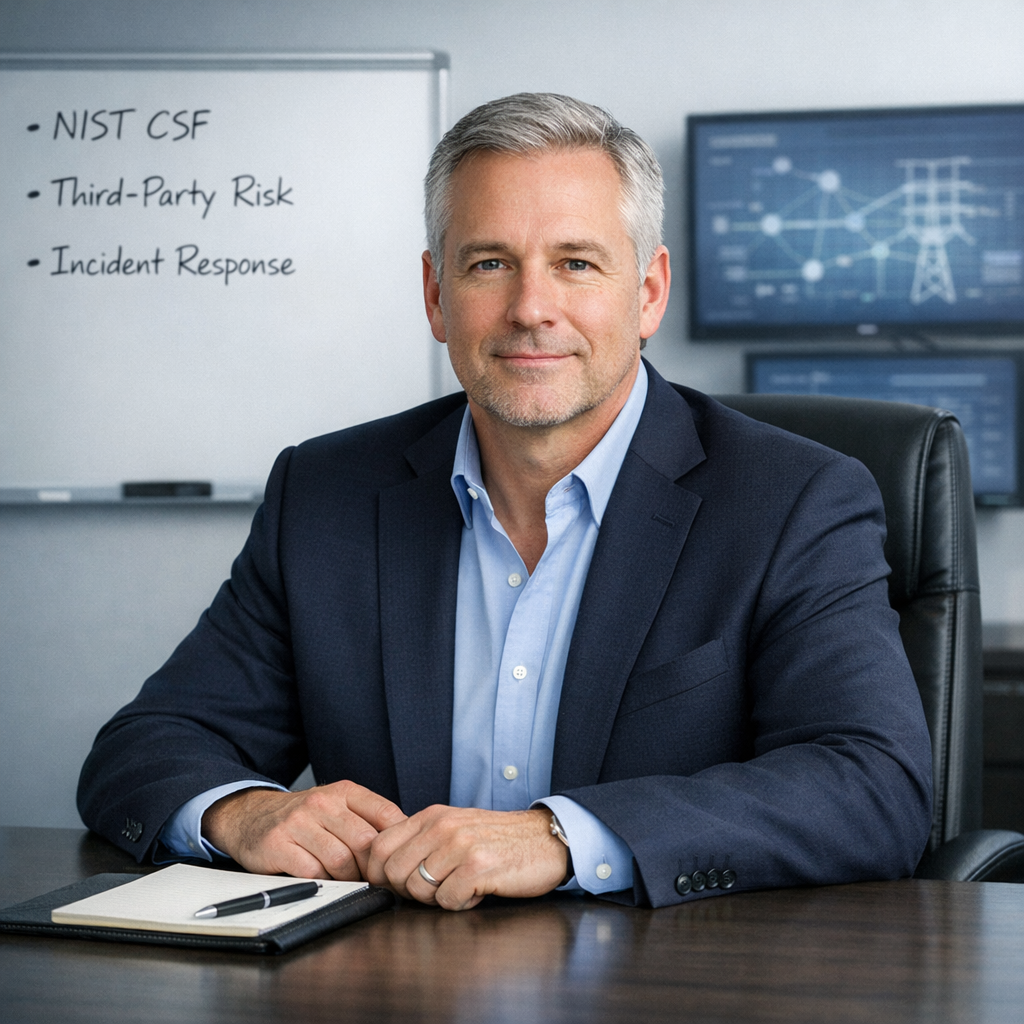
CIOs and CISOs in the energy sector are facing an inflection point. As digital infrastructure expands across operations, supply chains, and control systems, cybersecurity is no longer a contained technical issue. The risks are business-wide, affecting uptime, compliance, and public safety.
A recent SecurityScorecard report found that 90% of the world’s largest energy companies experienced a third-party breach within twelve months. This reflects structural exposure that spans enterprise systems, partner ecosystems, and critical infrastructure that cuts across enterprise systems, partner ecosystems, and critical infrastructure.
Leadership can no longer afford to view cyber risk as separate from core business priorities. If cybersecurity strategy remains confined to IT operations, the organization will continue to absorb avoidable risk without clear visibility or control.
Cybersecurity in the energy and utilities sector continues to escalate. As IT systems, operational technology, and third‑party suppliers become more interconnected, the number of potential entry points increases. According to SecurityScorecard and KPMG, 67% of breaches in the energy sector were linked to software and IT vendors, not internal systems.
Ransomware, phishing, and targeted intrusions are now common. These threats can interrupt power generation, destabilize grids, and overwhelm incident response teams. This is not just about data loss. It directly disrupts core operations.
The convergence of IT and OT environments has widened the attack surface. Most OT systems were never built with cybersecurity in mind. Without visibility or segmentation, attackers can gain access and move laterally across critical infrastructure.
Energy companies can no longer rely on defensive checklists. Managing cyber risk now requires proactive assessments, targeted resilience investments, and alignment at the executive level between cybersecurity and business continuity.
Energy companies operate within one of the most complex and exposed digital environments in critical infrastructure. Their systems often blend traditional IT networks with legacy operational technology, and that convergence is a major source of risk.
Power plants, grid control systems, and other OT environments were designed for availability and uptime, not security. Many still rely on legacy protocols, limited authentication, and unsegmented networks. Once attackers gain access, they can issue real-world commands that disrupt generation or distribution processes. These vulnerabilities are difficult to monitor and expensive to harden, especially in environments where downtime is not acceptable.
Third-party vendors, contractors, and software providers often have deep access to utility networks. A single breach in a supplier’s environment can become a direct path into core systems. In recent years, attackers have repeatedly compromised trusted vendors to bypass internal controls and gain access to critical infrastructure. These indirect breaches often go undetected until operations are already affected.
As enterprise IT systems merge with field-level OT platforms, attackers gain more ways to move laterally across networks. The historical separation between business systems and operational controls is fading fast. Without unified visibility, organizations struggle to detect intrusions early or respond effectively. Managing this expanded risk surface requires coordinated security protocols across both IT and OT domains, not siloed tools or isolated teams.
Most cybersecurity programs in the energy sector are still built around reaction, not resilience. Companies respond to incidents by buying tools, patching exposed systems, or handing off risk to external partners without clear oversight. This short-term thinking creates long-term exposure.
Security stacks are bloated with disconnected tools that don’t share data or priorities. Teams face alert fatigue and incomplete visibility across IT and OT environments. This weakens the organization’s ability to detect cyber threats early or coordinate an effective response. Adding more tools without a unified risk management strategy only increases cost and complexity without improving outcomes.
Many companies continue to treat cybersecurity as a technology issue instead of an enterprise risk. This isolates cyber planning from broader business impact, leaving operational disruption, reputational harm, and regulatory penalties out of the discussion. Risk assessments are either incomplete or misaligned with critical systems. To manage cybersecurity risks effectively, organizations need executive-level governance, not just technical fixes.
Cybersecurity professionals and operational teams often work in parallel but disconnected roles. OT systems lack the visibility and controls common in IT environments. During a breach, this lack of coordination slows containment and recovery. Energy companies must move toward integrated security operations that connect IT, OT, and leadership around a common risk model.
If your organization lacks the internal capacity to unify these efforts, Serverless Solutions offers Managed Security Services tailored to energy and utilities. Their MSSP model combines real-time threat monitoring with structured governance and cross-functional alignment, improving security posture without adding internal complexity.
Managing cybersecurity in the energy industry is no longer about selecting the right tools. It requires an enterprise-wide approach that connects security planning to business outcomes. CIOs and CISOs must operate as risk leaders, not just technical advisors.
Strategic cybersecurity programs start with frameworks that support effective risk management. Standards like the NIST Cybersecurity Framework and ISO/IEC 27001 provide structure for assessing posture, identifying gaps, and aligning security measures with business priorities. These are not checklists. Rather, they are decision-making tools that help energy and utility organizations face risk with greater clarity.
Executives need more than threat reports. They need cyber risk translated into operational and financial terms. That’s where models like FAIR (Factor Analysis of Information Risk) come in.
FAIR breaks cyber risk into components such as threat frequency, vulnerability, and potential loss. Instead of listing threats, it estimates the likelihood and business impact of events like ransomware attacks or OT system breaches. This enables leaders to model scenarios, compare controls, and focus on what truly reduces exposure.
By expressing risk in dollars, CIOs and CISOs can align cybersecurity investments with business impact. This supports stronger board conversations, clearer priorities, and smarter budget decisions.
Every cybersecurity initiative should connect directly to operational goals. For example, improving supply chain security safeguards the continuity of renewable energy systems and protects sensitive data shared with third-party vendors. Prioritizing asset visibility, employee training, and incident response capabilities builds resilience where the organization is most vulnerable. Cybersecurity solutions only add value when they mitigate risk in measurable, business-critical ways.
CIOs and CISOs are uniquely positioned to help boards understand cybersecurity not as a technical burden, but as a business priority. In the energy industry, that shift is essential. A missed risk signal could lead to operational failure, public safety incidents, or lasting reputational damage. Elevating the conversation requires strategy, precision, and business fluency.
Boards don’t need technical breakdowns of protocols or security patches. They need to understand how specific vulnerabilities create business consequences. For example, describe how a targeted cyberattack on SCADA systems could delay energy distribution, breach sensitive information, or violate safety standards. Linking risks to compliance costs, downtime, or market impact moves the discussion from abstract threats to tangible decisions.
Risk management discussions must be grounded in metrics that reflect business performance. This includes the mean time to respond, risk reduction per investment dollar, and the status of critical asset protection. When these metrics are framed around energy demands, infrastructure resilience, or third-party exposure, they help leaders prioritize what truly matters. Avoid vanity metrics that fail to reflect actual risk posture.
Cybersecurity for energy and utilities must be embedded in broader governance—not isolated within IT. Boards should review risk scenarios quarterly, include cybersecurity in operational planning, and demand accountability across departments.
At Serverless Solutions, our Managed Security Services help energy organizations embed governance-driven cybersecurity practices that deliver enterprise-wide visibility and resilience. This shift strengthens oversight, ensures better resource allocation, and positions cyber threats as core strategic risks. CIOs who lead this shift help their organizations adopt best practices and build resilience across the full energy infrastructure.
Perfect systems aren’t required to reduce cyber risk. What they need is structure, speed, and clear visibility into where their vulnerabilities exist. The first 90 days of any cybersecurity reset should focus on stabilizing the organization’s posture, clarifying governance, and closing the most urgent gaps in both IT and OT environments.
Start with a maturity assessment based on an accepted framework such as NIST CSF. Identify the top ten critical systems that support core operations, including those connected to operational technology and third-party vendors. Conduct a thorough risk assessment to surface potential vulnerabilities, prioritize sensitive data assets, and define where the organization is most exposed to cybersecurity threats.
Select a cybersecurity framework that matches business complexity and regulatory obligations. Map specific risks to operational units and infrastructure domains. Assign cross-functional ownership by forming a cybersecurity task force that includes IT, OT, and compliance leadership. Begin building a reporting model that tracks posture improvements, control status, and threat exposure.
Begin deploying controls on the highest-risk assets and close configuration gaps identified in earlier assessments. Define a board reporting schedule, initiate weekly risk reviews, and train key personnel on incident response roles. Schedule a tabletop exercise to simulate a coordinated attack on critical infrastructure, test your playbooks, and identify governance breakdowns before a real breach occurs.
A 90-day rollout won’t solve every risk, but it builds the structure and accountability needed to strengthen posture quickly, to manage cybersecurity risks with greater precision, and build lasting resilience across the energy infrastructure.
Cybersecurity in the energy sector must be treated as a board-level responsibility, not a technical afterthought. Leaders who prioritize risk alignment, measurable resilience, and governance will be in the strongest position to safeguard infrastructure and meet growing operational demands.
The shift begins with redefining posture, embedding accountability, and building cross-functional alignment between IT, OT, and business leadership. Energy companies that execute on this strategy will not only mitigate cyber threats but also strengthen their ability to adapt to industry change and regulatory pressure.
If your organization is ready to move from reactive response to risk-aligned execution, connect with the Serverless Solutions team to start a conversation.

6 min read
Cloud-native adoption is accelerating across the energy sector, but security hasn’t kept pace. In 2024, the average cost of a data breach in energy...

9 min read
A single cyber incident can disrupt power for hundreds of thousands, as seen in the 2015 Ukraine grid attack that left 225,000 people without...

7 min read
How confident are you that your cybersecurity metrics reveal what actually puts your utility at risk? Most executive dashboards are cluttered with...