10 min read
Cybersecurity Challenges in Distributed Energy Systems: Securing the Smart Grid
In 2024, a SecurityScorecard report found that 90% of the world’s largest energy companies, including every top 10 U.S. power company, experienced...
9 min read

A single cyber incident can disrupt power for hundreds of thousands, as seen in the 2015 Ukraine grid attack that left 225,000 people without electricity. The global energy sector’s digital transformation, rapid adoption of renewable energy, and growing reliance on automation have expanded the attack surface, making cyber resilience a board-level concern. The stakes extend beyond financial loss: public safety, national security, and the stability of entire economies depend on reliable energy delivery.
This guide covers:
P.S. Serverless Solutions’ Cloud Security Services are designed for organizations that need to keep energy operations secure, resilient, and compliant in a world where cyber risks continue to grow. Our approach combines always-on monitoring, rapid response, and zero-trust principles to help energy companies protect critical infrastructure and maintain reliable power. Book a call to see how our expertise can help you enhance cyber resilience that stands up to today’s most sophisticated threats.
| Key Factor | What, Why, and How (Detailed) |
|---|---|
| Risk Management & Vulnerability Assessment | Identify and prioritize vulnerabilities across OT, IT, and the supply chain. Use scenario planning and continuous risk reviews to adapt to evolving cyber threats and ensure business outcomes are protected. |
| OT/IT Integration & Security Principles | Segment networks, enforce identity controls, and automate monitoring to bridge OT/IT gaps. This reduces attacker movement and supports rapid detection of malicious activity. |
| Supply Chain & Third-Party Resilience | Vet vendors for security posture, require certifications, and monitor for changes in risk. Build resilience by sharing threat intelligence and enforcing contractual security requirements. |
| Regulatory Compliance & Frameworks | Align with NERC CIP, NIS Directive, and sector-specific standards. Go beyond compliance by embedding continuous improvement and adapting frameworks to new technologies and threats. |
| Incident Response & Recovery | Develop and test response plans, simulate attacks, and integrate lessons learned. Use ISACs and cross-sector partnerships to accelerate recovery and minimize disruption. |
| Automation & Behavioral Analytics | Deploy AI-driven anomaly detection and user behavior analytics to spot subtle threats. Automate response workflows to reduce dwell time and support reliable energy delivery. |
| Information Sharing & Culture | Foster a culture of resilience through leadership, training, and open information sharing. Participate in industry groups and ISACs to stay ahead of emerging risks. |
| Lessons from Major Incidents | Study real-world attacks (e.g., Ukraine grid) to identify gaps and strengthen resilience plans. Apply insights to OT, IT, and supply chain strategies. |
As energy systems become more interconnected and reliant on third-party vendors, attackers have more entry points than ever. Cyber threats target critical infrastructure with ransomware, supply chain exploits, and sophisticated OT attacks designed to disrupt operations or extort payments. The integration of digital controls, remote access, and IoT devices in modern energy systems has created new vulnerabilities, especially as legacy assets are connected to the grid.
The rise of renewable energy and distributed generation has further complicated cybersecurity in the energy sector. As wind power, solar, and battery storage become integral to the grid, each new technology introduces unique risks.
The energy transition, while essential for sustainability, demands a parallel investment in cyber resilience to ensure that new vulnerabilities do not undermine progress.
Read Next: Rethinking Cybersecurity: Turning Risk Into Strategy in the Energy Sector
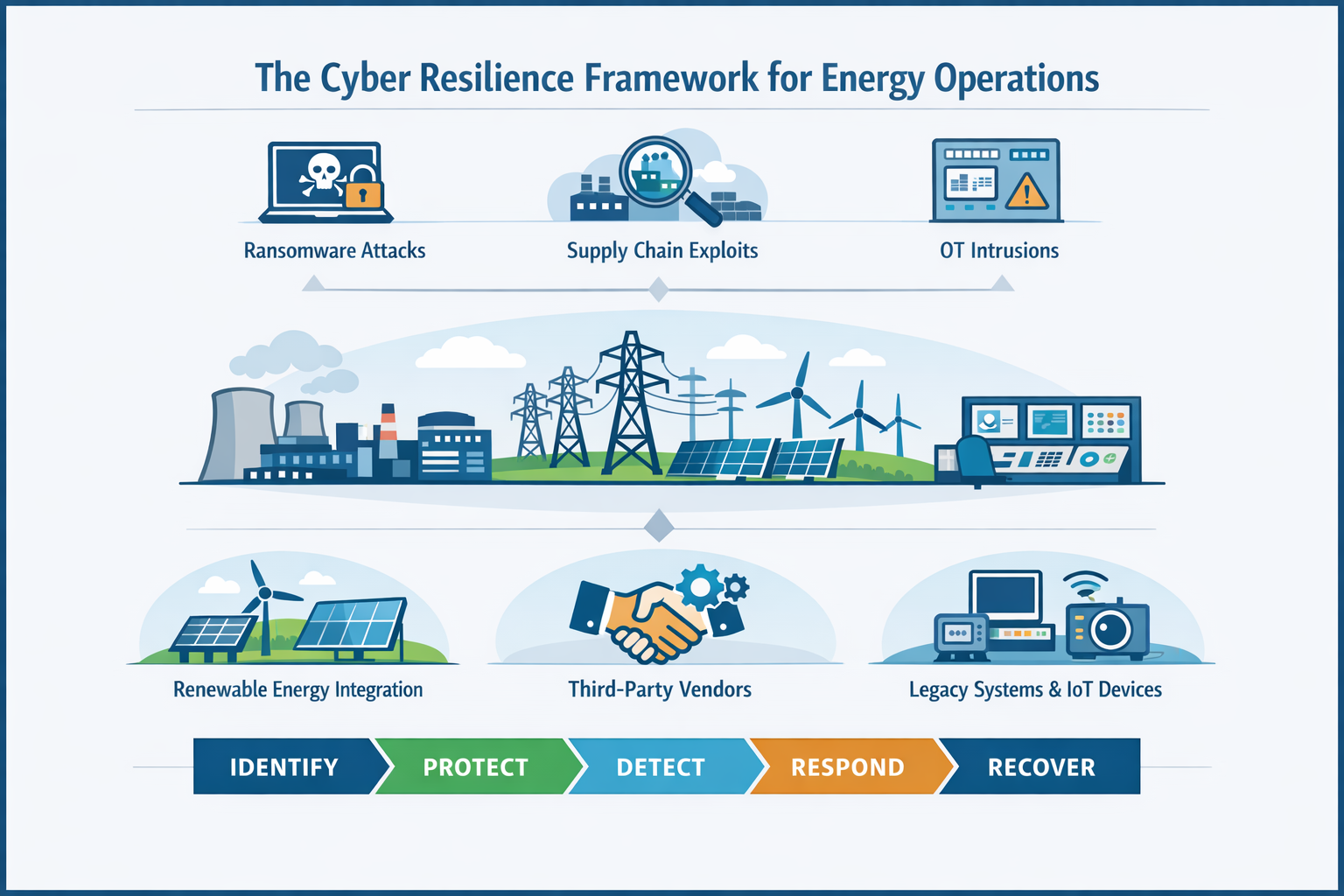
A robust risk management approach is the foundation of cyber resilience in the energy sector. Organizations must continuously assess, prioritize, and address risks across all layers of their operations.
The convergence of operational technology (OT) and information technology (IT) has transformed how energy organizations manage everything from grid operations to remote monitoring and automation.
Legacy OT systems, often designed without cybersecurity in mind, are now connected to modern IT networks, exposing critical infrastructure to evolving cyber threats. Attackers increasingly exploit these connections to move laterally, disrupt operations, or gain access to sensitive data.
To build true cyber resilience, energy organizations must adopt unified security principles that address both OT and IT environments, ensuring that controls are robust, adaptable, and aligned with the realities of modern energy systems.
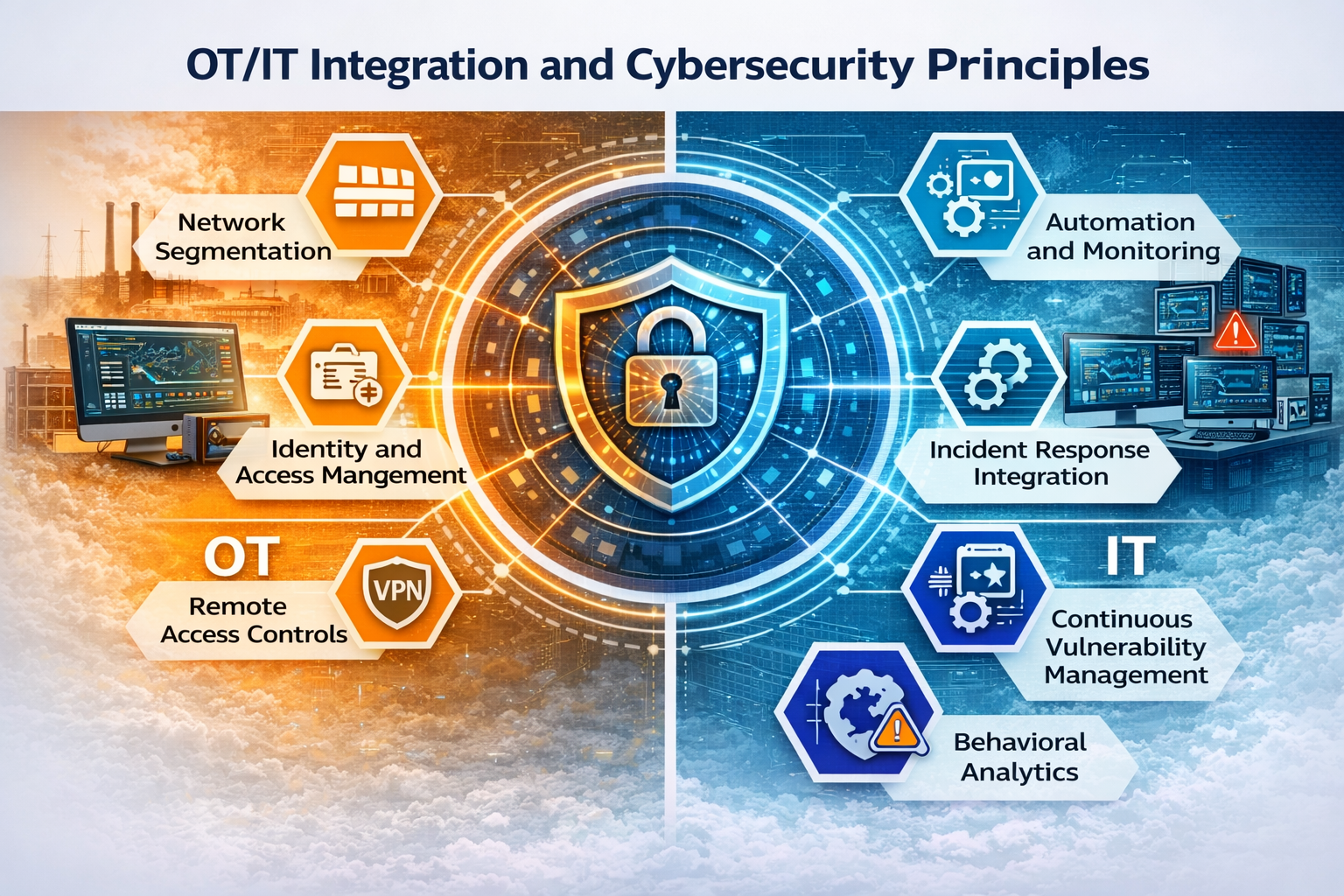
| Integration Challenge/Strategy | Recommended Security Principle |
|---|---|
| Network Segmentation | Separate OT and IT networks using firewalls and VLANs. This limits attacker movement and protects critical control systems from IT-originated threats. |
| Identity and Access Management | Enforce least-privilege access, multi-factor authentication, and role-based controls for all users and devices. This reduces the risk of unauthorized access to sensitive systems. |
| Automation and Monitoring | Deploy automated monitoring tools to detect anomalies in real time. Use AI-driven analytics to flag suspicious behavior and trigger a rapid response. |
| Remote Access Controls | Restrict and monitor remote access to OT systems. Require VPNs, strong authentication, and session logging to prevent unauthorized entry. |
| Incident Response Integration | Align OT and IT incident response plans, ensuring clear roles and communication channels. Conduct joint exercises to build cross-functional readiness. |
| Continuous Vulnerability Management | Regularly scan for vulnerabilities in both OT and IT environments. Patch systems promptly and track remediation progress to reduce exposure. |
| Behavioral Analytics | Implement user and entity behavior analytics (UEBA) to detect unusual activity that may signal insider threats or compromised accounts. |
Attackers often target suppliers because they can use trusted connections to bypass an organization’s direct defenses. For example, if a software vendor providing remote monitoring tools for substations is compromised, attackers can exploit that vendor’s legitimate access to install malware or disrupt grid operations. Similarly, if a hardware supplier’s firmware update process is not secure, malicious code can be introduced into critical devices before they are even deployed in the field.
Once inside, attackers can move laterally, disable safety systems, or cause outages by manipulating control systems. To enhance supply chain security, energy organizations should:
Energy organizations operate under a patchwork of regulatory requirements that are designed to protect critical infrastructure from cyber threats. These frameworks set the minimum standards for asset identification, access management, incident response, and ongoing risk assessment.
However, compliance alone does not guarantee resilience. Attackers often exploit gaps between regulatory requirements and real-world practices, especially as new technologies and operational models emerge.
The challenge for energy companies is to interpret and implement these frameworks in a way that not only meets audit requirements but also strengthens their ability to withstand, respond to, and recover from cyber incidents.
Energy organizations cannot prevent every cyber event, but they can control how quickly and effectively they respond and recover. The ability to contain an attack, restore operations, and learn from each event is what separates resilient organizations from those that suffer prolonged outages or repeated disruptions. Incident response in the energy sector is complicated as organizations must coordinate across OT and IT teams, communicate with regulators and the public, and manage third-party vendors who may be involved in the event.
| Incident Response Component | Practical Application in Energy Operations |
|---|---|
| Response Planning | Develop detailed, role-specific response plans for cyber incidents. Include escalation paths, communication protocols, and decision criteria for containment and recovery. |
| Exercises and Simulations | Conduct regular tabletop and live simulations to test response plans. Use realistic scenarios to identify gaps and build team confidence. |
| Communication Protocols | Establish clear internal and external communication channels for incident notification, stakeholder updates, and regulatory reporting. |
| Lessons Learned Integration | After every incident or exercise, document lessons learned and update response plans. Share insights across teams and with industry partners. |
| Information Sharing Platforms | Engage with ISACs and sector-specific groups to exchange threat intelligence and coordinate responses to widespread threats. |
| Stakeholder Coordination | Involve OT, IT, executive leadership, and third-party vendors in response planning and exercises. Build relationships before a crisis occurs. |
| Post-Incident Review | Conduct thorough reviews after incidents to assess root causes, response effectiveness, and areas for improvement. Use findings to drive continuous resilience enhancements. |
Read Next: How to Secure Cloud-Native Infrastructure in the Energy Sector
The tactics and motivations of cyber attackers evolve to match upgrades in the cybersecurity industry. Energy organizations now face threats that can bypass legacy controls, exploit automation, and leverage vulnerabilities in both technology and human behavior.
To stay ahead, organizations must look beyond established frameworks and invest in advanced strategies that anticipate future risks, harness new technologies, and create a culture of resilience at every level.
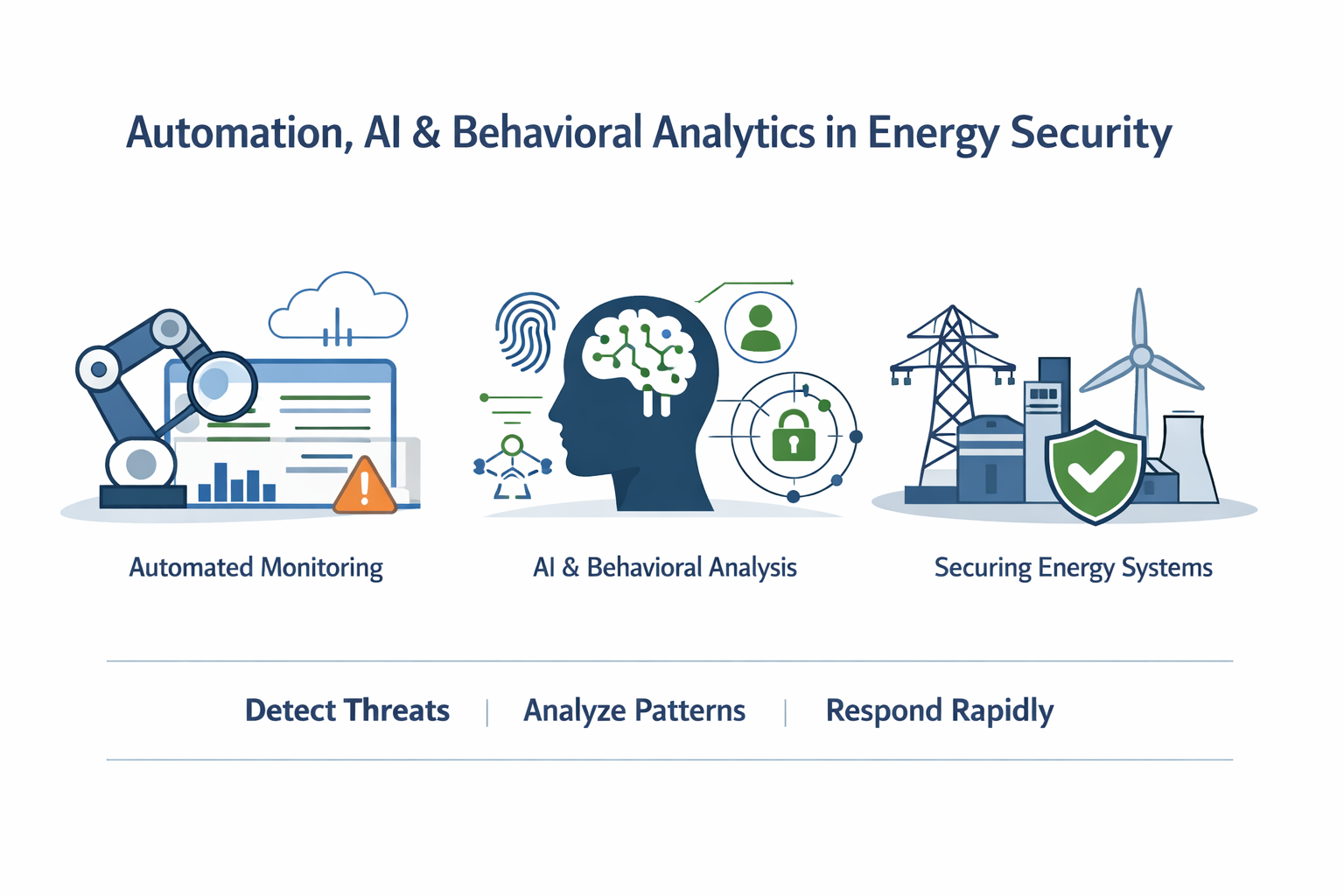
Automation and AI are reshaping how energy organizations detect, respond to, and recover from cyber threats. Automated monitoring tools can analyze vast amounts of network and information systems data in real time, flagging anomalies that would escape manual review. AI-driven behavioral analytics learn the normal patterns of users and devices, enabling early detection of malicious activity or insider threats.
Adopting these technologies requires careful planning. Start with pilot projects in non-critical environments, then scale up as teams gain confidence and expertise. Integrate automation into incident response workflows to accelerate containment and reduce attacker dwell time. As energy systems become more complex, automation and AI will be essential for maintaining resilience at scale.
Read Next: Inside the Operating Models That Power Artificial Intelligence Consulting
Technology alone cannot deliver cyber resilience. A resilient organization is built on a foundation of leadership, training, and open communication. Integrating resilience as a core value ensures that every employee understands their role in protecting critical energy assets. Regular training, phishing simulations, and scenario-based exercises help build muscle memory and readiness.
Information sharing is equally vital. Participation in industry groups, ISACs, and public-private partnerships enables organizations to stay ahead of evolving threats and learn from the experiences of others. By fostering a culture of transparency and collaboration, energy organizations can adapt more quickly to new risks and drive sector-wide improvements in resilience.
As new threats emerge and energy systems become more interconnected, organizations need to regularly assess their defenses, update their response plans, and strengthen relationships with vendors and industry partners. The most resilient energy companies are those that treat cyber risk as a core part of their operational strategy, invest in automation and analytics, and make continuous improvement a routine part of their security posture.
To support your journey, our Cloud Security Services provide always-on monitoring, rapid response, and expert guidance tailored to the unique needs of energy organizations. Book a call to discover how we can help you build a resilience strategy that delivers measurable business outcomes and protects your most critical assets.
Cyber resilience in energy operations refers to the ability of energy organizations to anticipate, withstand, recover from, and adapt to cyber incidents. This includes protecting critical infrastructure, maintaining reliable power delivery, and minimizing the impact of disruptions caused by cyber attacks, supply chain breaches, or system failures.
Energy companies manage supply chain cyber risk by vetting vendors for security posture, requiring certifications, and enforcing contractual obligations for incident reporting and information sharing. Ongoing monitoring, regular audits, and participation in industry groups help organizations stay ahead of emerging threats and reduce the likelihood of supply chain-driven disruptions.
Key frameworks include the North American Electric Reliability Corporation (NERC) Critical Infrastructure Protection (CIP) standards, the European Commission’s NIS Directive, and sector-specific guidelines from organizations like the International Energy Agency. These frameworks provide requirements and best practices for asset identification, access management, incident response, and continuous improvement.
Secure OT/IT integration involves network segmentation, strict identity and access management, automated monitoring, and coordinated incident response. Regular vulnerability assessments, patch management, and behavioral analytics further reduce risk by detecting and containing threats across both operational and information technology environments.
Common threats include ransomware attacks targeting OT systems, supply chain exploits, phishing campaigns, and targeted attacks by nation-state actors. The increasing use of automation, remote access, and IoT devices has expanded the attack surface, making continuous monitoring and rapid response essential for resilience.
Effective response involves activating a detailed incident response plan, communicating with stakeholders, containing the threat, and restoring operations as quickly as possible. Post-incident reviews and lessons learned are critical for updating response plans and strengthening resilience against future attacks.

10 min read
In 2024, a SecurityScorecard report found that 90% of the world’s largest energy companies, including every top 10 U.S. power company, experienced...
15 min read
As energy companies modernize, the attack surface expands, exposing critical infrastructure to advanced persistent threats and insider risks. As per...

6 min read
Cloud-native adoption is accelerating across the energy sector, but security hasn’t kept pace. In 2024, the average cost of a data breach in energy...